
Why Mortgage Rates Matter for Miami Investors in 2026
Mortgage rates play a decisive role in real estate investing, but their importance goes far beyond the interest charged on a loan. In 2026, mortgage rates have reached a phase of relative stability after years of sharp fluctuations, giving investors clearer ground on which to plan and execute long-term strategies.
For Miami investors, this stability is especially relevant. The city remains one of the most dynamic real estate markets in the United States, supported by population growth, international demand, and limited land availability. When these fundamentals are combined with a predictable financing environment, investors gain the ability to structure deals with confidence rather than speculation.
This guide explains how current mortgage rates influence real estate investment decisions in Miami and how investors can use today’s rate environment as part of a disciplined, long-term strategy.
Current Mortgage Rates:
Current mortgage rates reflect a more balanced lending environment. Inflation expectations have moderated, financial markets are less volatile, and lenders are pricing risk with greater consistency than in previous years. As a result, investors are no longer forced to react to sudden rate swings, but instead can focus on fundamentals.
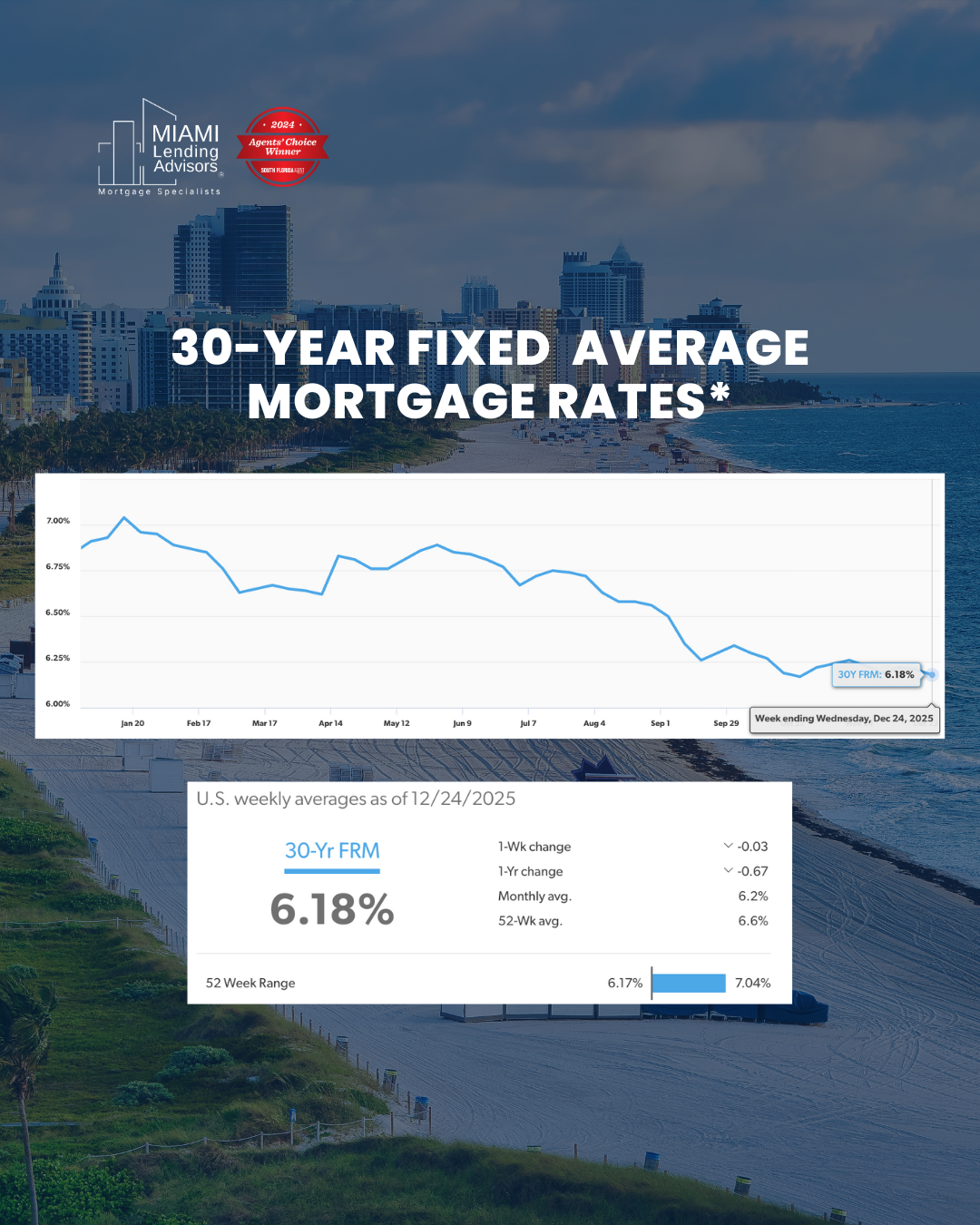
Most investors are seeing 30-year fixed mortgage rates in the mid-6 percent range, while 15-year fixed loans are typically lower. Adjustable-rate mortgages often start with more attractive introductory rates, and jumbo loans—common in Miami due to higher property values—carry a premium tied to loan size and underwriting requirements.
In practical terms, current mortgage rates affect investors in several core ways:
- The size of monthly debt service obligations
- Overall purchasing power and leverage
- The predictability of long-term cash flow
Rather than concentrating on national averages, Miami investors benefit more from understanding how rates apply to their specific situation, including property type, loan structure, and investment horizon.
Opportunities for securing favorable terms.
The journey to homeownership, albeit intricate, offers tremendous economic rewards for those willing to invest the effort in finding the best mortgage rates. This proactive stance not only benefits homebuyers but additionally real estate experts and investors by maximizing the return on investment.
How Current Mortgage Rates Impact Investment Performance
Mortgage rates influence investment returns at multiple levels, beginning with cash flow but extending well beyond monthly payments.
Higher rates increase borrowing costs, which can compress cash flow if rental income is insufficient or expenses are underestimated. However, Miami’s rental market has remained resilient, allowing well-selected properties to absorb higher financing costs more effectively than in weaker markets.
At a broader level, mortgage rates interact with cap rates and overall deal valuation. Cap rates measure unleveraged performance, while mortgage rates determine how leverage amplifies or limits returns. In supply-constrained markets like Miami, cap rates do not always rise proportionally with interest rates, especially in neighborhoods with strong rental demand and long-term appeal.
For many investors, the impact of current mortgage rates can be summarized across three dimensions:
- Short-term cash flow, influenced by debt service
- Medium-term flexibility, including refinancing or repositioning
- Long-term equity growth, driven by appreciation and principal paydown
Understanding this balance helps investors avoid overly simplistic decisions based solely on interest rate levels.
Why Miami Remains an Attractive Investment Market Despite Current Rates
Mortgage rates alone do not define a market’s investment potential. Miami’s continued appeal is rooted in fundamentals that extend beyond financing conditions.
The city continues to attract domestic migration, international capital, and a growing base of professionals and entrepreneurs. This inflow supports rental demand across multiple segments, from urban apartments to luxury condominiums. At the same time, Miami’s geographic constraints limit new supply, reinforcing long-term value and price stability.
From an investor’s perspective, this means Miami tends to behave differently from many U.S. markets. Price adjustments are often less severe, and demand recovers more quickly during economic transitions. As a result, current mortgage rates, while important, do not diminish Miami’s long-term investment case when deals are structured responsibly.
Using Current Mortgage Rates to Build an Effective Financing Strategy
Successful investors view mortgage rates as one component of a broader financing strategy rather than as a single decision point.
Fixed-rate mortgages offer predictability and protection against future rate increases, making them suitable for long-term hold strategies. Adjustable-rate mortgages, on the other hand, can improve early cash flow and are often used by investors planning shorter holding periods or value-add projects.
Loan term selection also plays a critical role. Thirty-year loans remain popular among Miami investors because they preserve liquidity and allow capital to be deployed across multiple properties. Shorter-term loans reduce total interest paid but require stronger and more consistent cash flow.
When evaluating financing options, investors typically weigh:
- Stability versus flexibility
- Cash flow today versus equity growth over time
- Alignment between loan structure and exit strategy
Miami’s lending environment remains relatively accessible, including for foreign national investors, although additional documentation and planning are often required.
Timing Purchases and Refinancing in a Stable Rate Environment
Attempting to perfectly time mortgage rates often leads investors to delay viable opportunities. In a more stable rate environment like 2026, disciplined execution tends to outperform speculation.
Locking a rate can provide certainty when deal viability depends on predictable payments. Floating may be appropriate when trends suggest gradual improvement and timelines allow flexibility. Refinancing remains a valuable long-term tool, particularly for investors who acquire properties with strong operational performance and growing equity.
Rather than waiting for ideal conditions, experienced investors focus on deals that make sense under current assumptions and improve over time through rent growth and strategic refinancing.
Common Investor Mistakes When Evaluating Mortgage Rates
Some of the most costly investment errors stem from misinterpreting the role of mortgage rates. Common mistakes include waiting indefinitely for lower rates, ignoring rental fundamentals, or selecting loan structures that conflict with exit strategies.
Mortgage rates should be evaluated within a comprehensive investment framework that includes market demand, property performance, and long-term objectives.
Frequently Asked Questions About Current Mortgage Rates and Miami Investing
Are current mortgage rates still workable for investors?
Yes. When properties are selected carefully and financing is structured correctly, current rates can support profitable investments.
Do higher mortgage rates automatically lead to lower prices?
Not necessarily, particularly in supply-constrained markets like Miami.
Is refinancing a realistic option in 2026?
It can be, depending on equity growth, market conditions, and future rate movement.
Can foreign investors finance property in Miami?
Yes. Miami remains one of the most accessible U.S. markets for international investors.
Should investors wait for lower rates before buying?
Waiting often results in missed opportunities and higher acquisition costs.
Final Thoughts: Turning Current Mortgage Rates Into a Strategic Advantage
Current mortgage rates are neither a barrier nor a guarantee of success. They are a variable that, when understood and managed correctly, can support disciplined and resilient investment strategies.
In 2026, Miami continues to reward investors who focus on fundamentals, structure financing thoughtfully, and approach the market with long-term clarity rather than short-term speculation.
Work With a Miami Investment Mortgage Advisor
Choosing the right mortgage structure can significantly influence long-term investment performance. A Miami-based mortgage advisor with investor experience can help align financing decisions with your objectives, whether you are a local buyer or an international investor.
Are you ready to start your mortgage journey? START HERE.
Sources
1. Freddie Mac – Primary Mortgage Market Survey (PMMS)
Latest national mortgage rate data from Freddie Mac’s own survey:
???? “The 30-year fixed-rate mortgage averaged 6.10% as of January 29, 2026, while the 15-year fixed-rate mortgage averaged 5.49%.” — Freddie Mac Mortgage Rates – Primary Mortgage Market Survey (PMMS)
2. Mortgage Bankers Association (MBA) – Weekly Survey Data
Weekly mortgage application trends and contract interest rates:
???? “The average contract interest rate for 30-year fixed-rate mortgages backed by the FHA decreased to 6.74 percent from 6.76 percent… and the effective rate remained unchanged.” — Mortgage Applications Increase in Latest MBA Weekly Survey (Jan 22, 2025)
3. National Association of Realtors (NAR) – 2026 Forecast
NAR’s housing market outlook including expectations for mortgage rates and sales:
???? “Mortgage rates are projected to decline modestly, averaging around 6% in 2026.” — NAR Forecast: Home Sales Expected to Jump 14% in 2026
4. Miami Realtors – Southeast Florida Market Outlook
Localized forecast reflecting Miami and Southeast Florida trends:
???? “Mortgage rates are likely to stabilize at 6% in 2026 from 6.7% in 2025… single-family sales are likely to rebound 5% in 2026.” — Southeast Florida Home Sales to Rebound in 2026 as Mortgage Rates Hit 6%
5. Realtor.com 2026 Housing Forecast
Consumer real estate forecasts including mortgage rate expectations:
???? “In 2026, we expect a steadier housing market… mortgage rates are forecast to average 6.3%, easing affordability pressures slightly.” — Realtor.com 2026 Housing Forecast