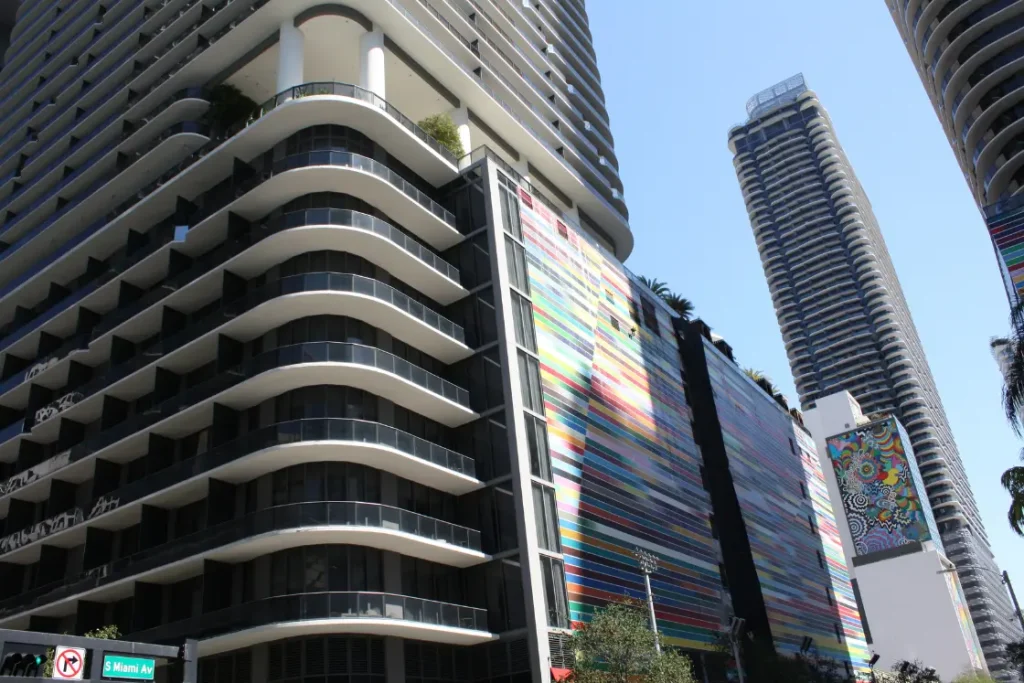
Miami’s Luxury Real Estate Market is no longer riding a temporary wave — it has entered a structural growth phase. What began as a pandemic migration story has evolved into a long-term repositioning of wealth toward South Florida.
Explosive Growth, Billionaire Migration & Strategic Wealth Opportunities
In 2026, the city is not simply attracting affluent buyers. It is attracting industry leaders, hedge fund founders, tech visionaries, and legacy wealth families looking to anchor themselves in a tax-efficient, globally connected hub.
Let’s break down what’s happening — and why it matters.
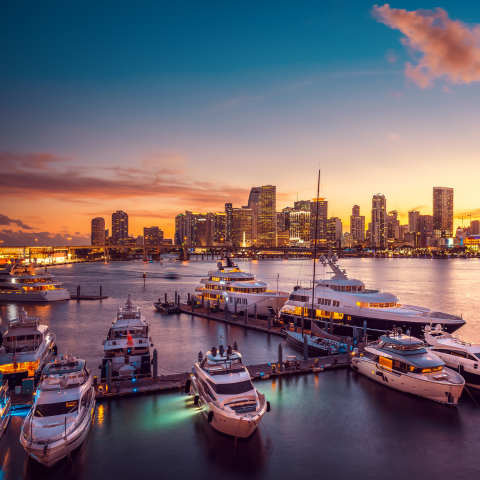
The Structural Shift Behind Miami’s Luxury Real Estate Market
During the pandemic, Miami experienced a surge of high-net-worth relocations from New York, California, and Illinois. Many assumed it was temporary. It wasn’t.
Real estate analyst Ana Bozovic describes today’s activity as a continuation, not a new spike.
The difference in 2026? The migration is now institutional and coordinated.
Key long-term drivers include:
- Florida’s constitutional ban on state income tax
- Business-friendly regulatory environment
- Capital preservation strategies among ultra-high-net-worth individuals
- Lifestyle advantages that compete globally
- Strong international connectivity
This is not speculative buying. It is strategic wealth relocation.
The Billionaire Multiplier Effect
When Ken Griffin moved Citadel from Chicago to Miami in 2022, it sent shockwaves through Wall Street. It was more than a relocation — it was a signal.
Now in 2026, Griffin and Miami Dolphins owner Stephen Ross have jointly contributed $10 million to the “Ambition Accelerated” initiative through The Florida Council of 100.
Their public argument is simple:
- Lower taxes increase disposable capital
- Florida offers long-term fiscal predictability
- Corporate leaders can operate with greater flexibility
At a Wall Street Journal event in West Palm Beach, Ross highlighted Florida’s tax advantages, conservative politics, and quality of life as major relocation incentives.
This coordinated advocacy strengthens Miami’s Luxury Real Estate Market by reinforcing confidence at the highest levels of capital.
The Tech Founder Factor: A Second Wave?
Jeff Bezos announced his move back to South Florida in 2023. While some tech entrepreneurs returned to California or New York after the pandemic, industry insiders believe the next chapter may look different.
Jay Roberts, CEO of Prosper Group, described the potential relocation of major tech founders as:
“A watershed moment for Miami and a huge negative for California.”
If more tech leadership follows, Miami’s Luxury Real Estate Market could experience:
- Accelerated demand in $15M+ waterfront estates
- Increased absorption of branded luxury condos
- Expanded venture capital presence
- Rising land values in Coconut Grove and Miami Beach
Momentum attracts momentum.
Ultra-Luxury Sales Performance: The Numbers Tell the Story
The top tier of Miami’s Luxury Real Estate Market remains exceptionally strong.
In 2025:
- 361 properties sold above $10 million
- One of the highest ultra-luxury transaction years on record
Early 2026 trends show:
- Record pace of $10M+ contracts in January
- Continued dominance of cash buyers
- Strong absorption in new development inventory
Unlike interest-rate-sensitive markets, Miami’s ultra-luxury sector operates differently. Many transactions involve liquidity events, hedge fund profits, tech exits, or generational wealth transfers.
This provides insulation against rate volatility.
Neighborhoods Dominating Miami’s Luxury Real Estate Market
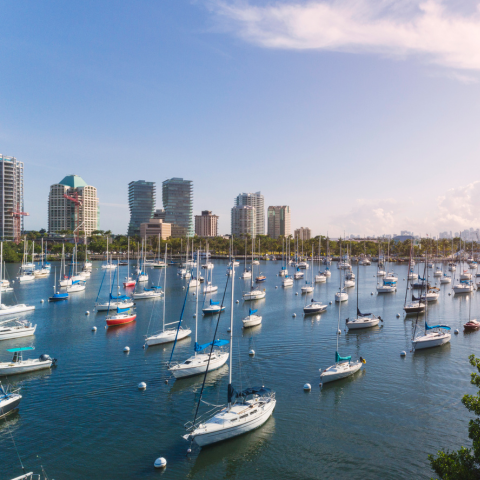
Coconut Grove: Quiet Power
Coconut Grove has quietly transformed into a billionaire enclave. Privacy, estate-sized lots, and proximity to Brickell’s financial district make it highly desirable. Large off-market transactions are becoming increasingly common here.
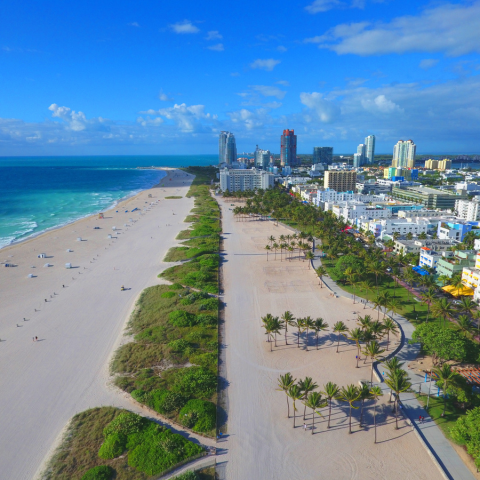
Miami Beach & Barrier Islands: Timeless Scarcity
Waterfront inventory is finite. That scarcity continues to drive pricing resilience.
Buyers are prioritizing:
- Direct ocean or bay frontage
- Private dock access
- Elevated and climate-resilient construction
Even when broader inventory rises, true waterfront remains constrained.
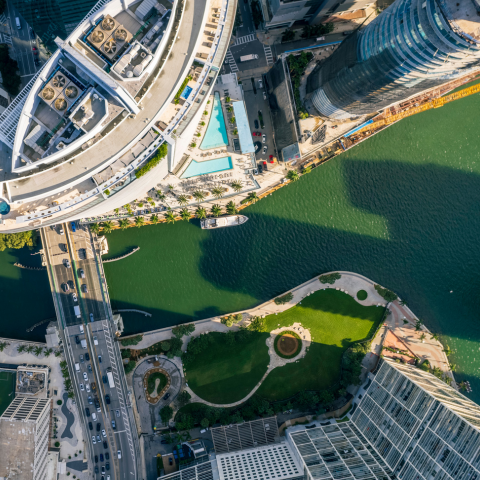
Brickell & Edgewater: Vertical Luxury
Luxury condo towers attract:
- International investors
- Finance executives
- Tech founders
- Latin American capital
Branded residences and wellness-focused amenities are major selling points.
Why International Buyers Remain Critical
International capital remains a backbone of the luxury segment. In many new luxury condo developments, international buyers account for more than half of presales.
Foreign buyers are drawn by:
- Dollar-denominated asset protection
- Political stability relative to Latin America
- Cultural familiarity
- Strong rental demand for high-end properties
Financing in a High-Liquidity Environment
Even in a cash-heavy market, strategic financing remains a powerful tool for sophisticated buyers in Miami’s Luxury Real Estate Market.
While many ultra-luxury transactions involve significant liquidity, high-net-worth individuals often choose to leverage financing intelligently rather than deploy full cash positions. Why? Because preserving capital can create stronger long-term returns elsewhere.
In 2026, financing luxury properties is less about necessity — and more about strategy.
Buyers commonly use financing to:
- Preserve liquidity for alternative investments
- Optimize tax structuring
- Maintain portfolio diversification
- Manage opportunity cost
- Increase leverage efficiency in appreciating markets
For properties above conforming loan limits, specialized solutions like Jumbo Loans play a critical role. These loans are specifically designed for high-value real estate purchases and offer flexible structuring options tailored to affluent borrowers.
In Miami’s Luxury Real Estate Market, jumbo financing is frequently used for:
- Waterfront estates
- Luxury condominiums in Brickell and Edgewater
- Multi-million-dollar single-family homes in Coconut Grove
- Investment properties above traditional lending thresholds
Sophisticated buyers understand that capital efficiency matters. Even when paying cash is possible, structured financing can enhance wealth preservation strategies and long-term asset growth.
In today’s environment, luxury lending is not just about qualifying — it’s about aligning financing with broader financial planning objectives.
Potential Risks to Monitor
No market is immune to external pressures. Key considerations include:
- Rising coastal insurance premiums
- Climate adaptation requirements
- Global economic fluctuations
- Political shifts at the federal level
However, Miami’s demand base is diversified — spanning hedge funds, entrepreneurs, international investors, and legacy wealth. That diversity strengthens resilience.
FAQs About Miami’s Luxury Real Estate Market
Is Miami’s Luxury Real Estate Market still appreciating in 2026?
Yes. Growth has moderated in mid-tier luxury, but ultra-luxury properties remain strong with limited supply.
Why are billionaires choosing Florida?
Primarily due to zero state income tax, regulatory predictability, and lifestyle benefits.
Are tech entrepreneurs returning to Miami?
Some may reconsider relocation as high-profile founders signal renewed interest in South Florida.
Which neighborhoods are strongest for long-term value?
Coconut Grove, Miami Beach, Coral Gables, and Brickell remain top performers.
Is the current migration trend sustainable?
Analysts describe it as structural rather than temporary, suggesting long-term stability
Is now a good time to invest in luxury Miami real estate?
For buyers seeking asset diversification, tax advantages, and global positioning, Miami remains strategically compelling.
Expert Outlook for the Rest of 2026
The coordinated push by figures like Ken Griffin and Stephen Ross to attract more billionaires signals long-term confidence in Florida’s economic direction.
If additional tech founders relocate, the demand surge could intensify.
Miami’s Luxury Real Estate Market is no longer an emerging story — it is a matured global wealth hub.
For additional data on national luxury housing trends, see the National Association of Realtors report:
Conclusion: A Market Redefined by Wealth Migration
Miami’s Luxury Real Estate Market in 2026 stands as one of the most resilient and globally attractive high-end property markets in the world.
Fueled by billionaire relocation, institutional investment, international demand, and structural tax advantages, the city has transformed into a permanent destination for global capital.
While some early tech migrants returned to traditional hubs, the next wave may already be forming. And if history is any indicator, Miami isn’t just benefiting from migration — it’s redefining American luxury real estate.